Google held its annual I/O software event at Mountain View, California’s Shoreline Amphitheatre on May 20 and, not surprisingly, AI was everywhere. Google’s spearheading of AI developments ensures that essentially all Google products and services will feature AI to some degree in the near future. VR and AR will be especially bolstered by AI while continuing to be a focal point for Google’s ambitions in entertainment, education, commerce, and industry.
Here’s what we learned about the latest VR and AR developments at Google I/O 2025 and how they will impact VR and AR porn.
Android XR & Google’s New Visions
We have previously covered the Android XR ecosystem and the AR headset it has developed in collaboration with Samsung, dubbed Galaxy XR. At this year’s I/O event, Google gave more information about both the device and the platform. Showing off the headset formerly known as ‘Project Moohan’, a pair of smartphone-connected glasses equipped with Android XR features as well as a camera, speakers, and a lens display, Google also announced its collaboration with Warby Parker and Gentle Monster, who will provide stylish frames to hold the tech.
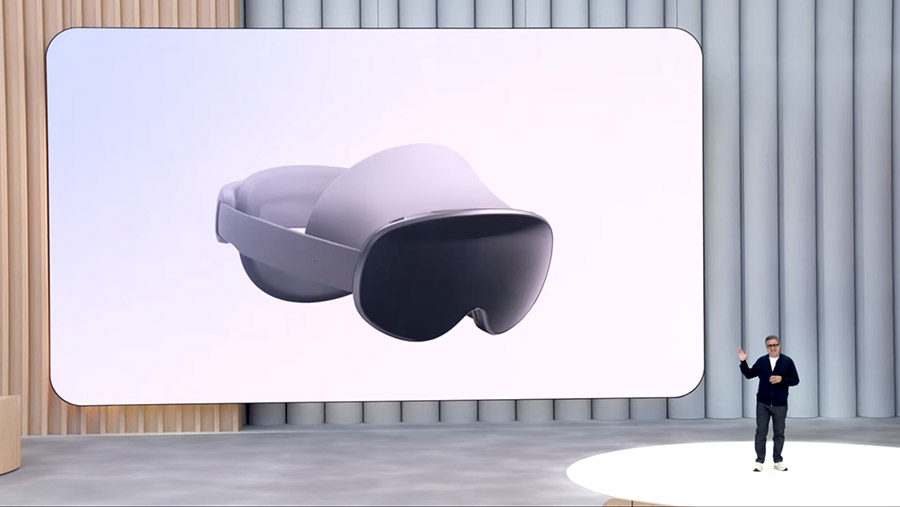
Google has collaborated with Samsung on a new AR headset known as Project Moohan. [Image: Google]
Google Beam was also revealed, a 3D camera capture system that allows for 3D/VR video meetings viewed via a light field display system. This may finally bring video conferencing to the level of immersion VR aficionados have been longing for.
Imagen 4, the latest version of Google’s image generation model, was unveiled at I/O 2025. It reportedly provides increased graphic detail and stronger visuals while also improving AIs' notoriously (often hilariously) weak performance in rendering text graphically.
Veo 3, Google’s video generation model, arrives with a feature: Flow. This AI filmmaking tool offers improved physics, generative sound effects, background noises, and even dialogue, all from text prompts. Both Veo 3 and Flow are now available.
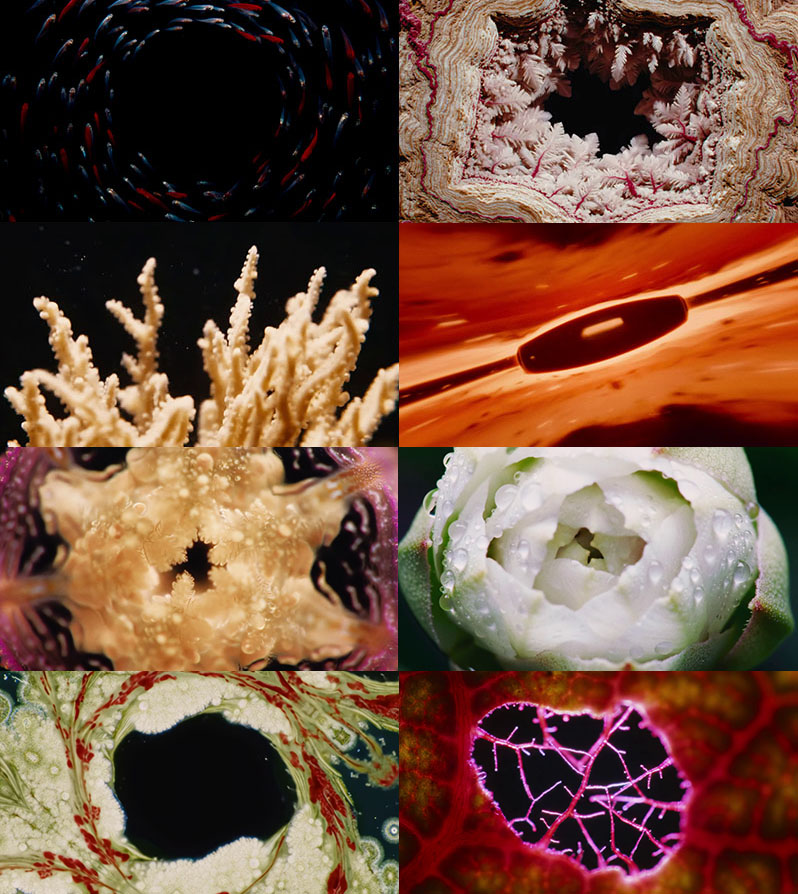
Images from Ancestra, directed by Eliza McNitt and produced by Darren Aronofsky's AI studio Primordial Soup. [Image: Primordial Soup]
Acclaimed filmmaker Darren Aronofsky and his newly launched AI production studio, Primordial Soup, worked with Google to produce a 13-minute short film directed by Eliza McNitt, a filmmaker dedicated to VR. ‘Ancestra’ is not completely AI-generated, but it does use sequences created by AI to transition between live-action scenes. Though not a VR film, ‘Ancestra’ does bode well for AI integration into VR filmmaking.
Gemini is Everything
Gemini 2.5 Pro was announced, as expected, at I/O 2025. Among its features and potential uses, this updated Gemini AI model can analyze a human voice and recreate it speaking in different languages.
As Google intends to integrate Gemini into all of its physical products, from TVs to watches to glasses to cars, something as universal as language barriers may cease to exist for millions of people.
What Does it Mean for Porn?
Google’s huge advances in AI, still image, and video generation show huge potential to revolutionize adult entertainment. Veo and Flow point to the creation of photorealistic human (and non-human) characters engaging in sex acts either observed by a viewer or engaged with via VR immersion. Generative sound effects and dialogue mean these experiences will be more lifelike and convincing while also allowing the viewer to influence and even direct what occurs in a more precise fashion.
Google Beam could radically alter the adult webcam industry - including VR cams as featured on this very site - along with other kinds of personal video conferencing between consenting adults. Imagine calling your partner while she’s on a work trip and experiencing her in immersive 3D - the erotic potential is enormous. Or, perhaps you prefer a stranger.
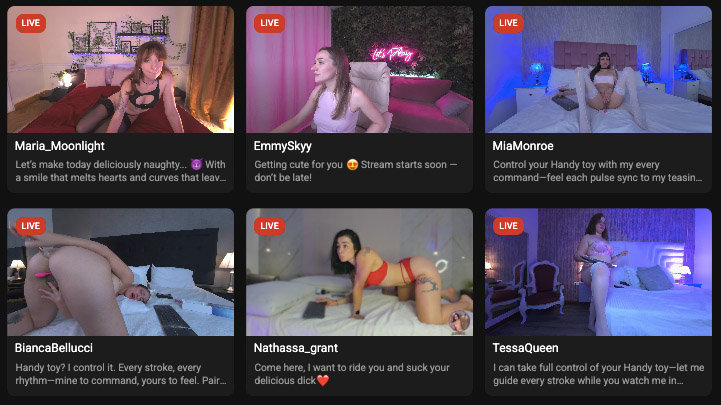
Pushing sex work further into the virtual would increase safety, security, and anonymity while also expanding choice and opportunity across the globe.
Whatever ends up shaping the future of porn, it is inconceivable it will not involve AI, VR, and AR technologies like those announced and detailed at Google I/O 2025.