Meta Connect 2025: AI Glasses, Horizon, and More
 Meta’s annual Connect event took place September 17-18, both online and at Meta’s Menlo Park, California headquarters. This year saw both exciting hardware and innovative software improvements showcased, many of them boosting the adoption and evolution of VR, AR, and AI technologies. Let’s look at the major items of interest from Meta Connect 2025.
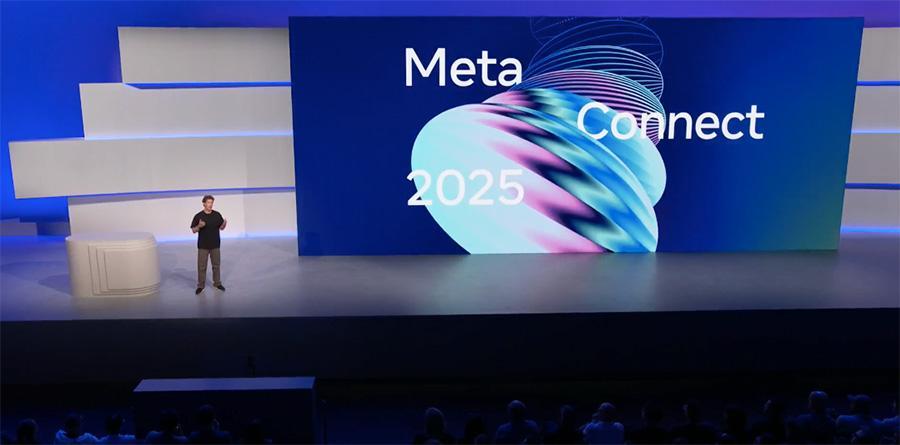 Meta founder and CEO Mark Zuckerberg delivers his keynote address at Meta Connect 2025. [Image: Meta]
 Virtual Reality’s Not Dead
VR may not have been the central focus of Meta Connect 2025 as it had been in previous years, but the tech is far from a relic. Meta revealed a new Horizon Engine that speeds up world loading, improves graphics, and can support more than one hundred users in one instance. The new engine will arrive on Horizon OS in the near future.
Rolling out at present is Horizon Hyperscape, a tool that allows users to capture a real world space and turn it into a virtual environment. After about ten minutes of scanning and anywhere between one and eight hours of processing, users can visit their virtual Hyperscape via Meta servers in their personal headset.
 Meta Hyperscape allows users to scan and render real world environments in VR. [Image: Meta]
 Meta also teased an overhauled Horizon OS interface, which Meta Chief Technical Officer Andrew Bosworth referred to as both “a work in progress,” and “[Meta’s] spatial UI navigation.”
All Eyes on Smart Glasses
The biggest news and products to emerge from Connect 2025 focused on Meta’s increased commitment to refining AI-powered smart glasses.
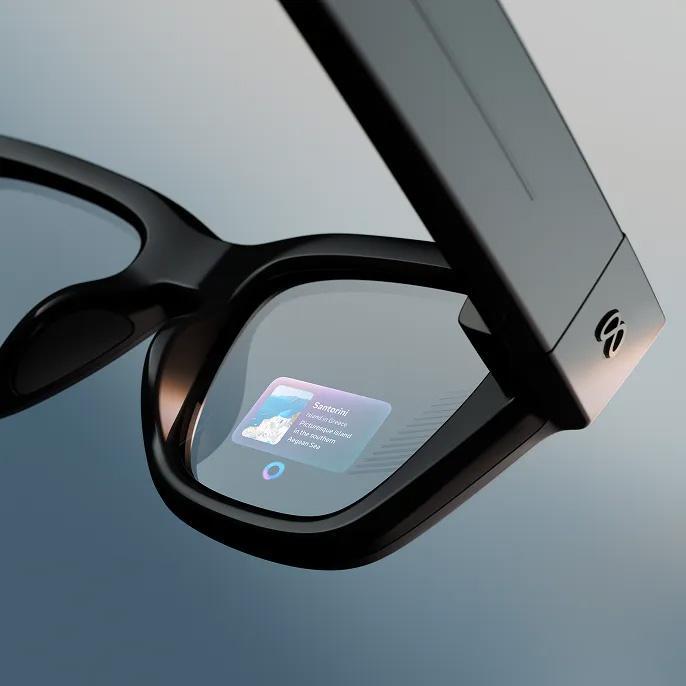 Meta Display is the first AI-era smart glasses product to feature a dedicated on-lens display. [Image: Meta]
Meta Ray-Ban Display, the company’s first smart glasses product with a visual display, took center stage with Mark Zuckerberg donning a pair for his keynote presentation. Paired with an included sEMG wristband dubbed Neural Band for gestural control, Display offers full color graphic overlay on the right lens. This titular display can provide a huge range of visual information from subtitled real-time conversation to text messages to language translation of a text-based sign or document. Along with a camera, microphone, and speakers, this graphic feature finally has smart glasses offering a full range of AV features.
Meta Ray-Ban Display will be available for $799 from select retailers from September 30.
Ray-Ban Meta Gen 2 offers upgrades over the previous iteration with 3K video recording, improved battery life and power handling. Available now for $379, Ray-Band Meta Gen 2 comes in three styles: Wayfarer, Headliner, and Skyler.
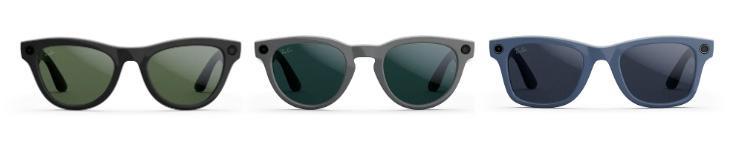 Meta Ray-Ban Gen 2 expands the style lineup to three fashionable frames. [Image: Meta / Ray-Ban]
 For the active smart glasses fan, Oakley Meta Vanguard finally brings Oakley’s iconic wraparound Sphaera design to this collaboration between industry giants. Oakley Meta Vanguard features a centered camera with a wide FOV and essentially functions the same as Ray-Ban Meta and Oakley Meta HSTN, while also featuring IP67 water resistance. Oakley Meta Vanguard starts shipping on October 21 and is priced at $499.
A Toolkit for Wearables
Due later this year, Meta’s wearable device toolkit will allow phone apps to work with the camera, mic, and speakers in all Meta glasses, as well as Display’s display.
Integration of Garmin and Strava devices and features is also coming. Meta AI can provide information related to your workout and autocapture video when you reach a fitness goal like desired heart rate or elevation, speed, and distance milestones. This information can also be overlaid onto videos captured via the smart glasses for synchronized review and, of course, social media sharing.
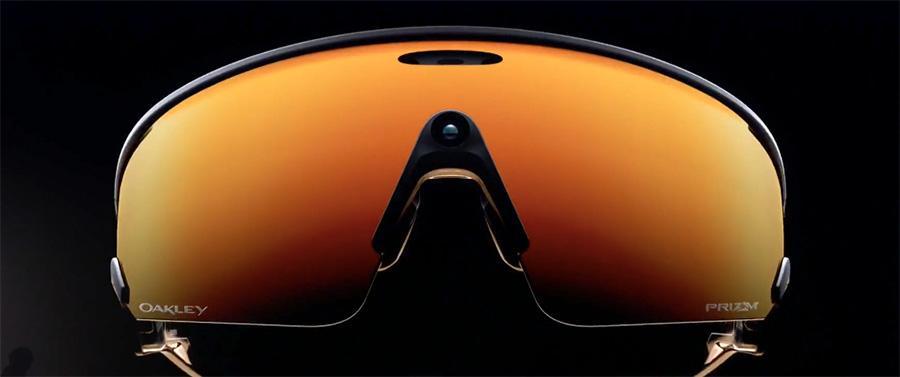 Oakley Meta Vanguard will offer integration with Strava and Garmin services and products. [Image: Meta / Oakley]
 One Fumble After Another
As appetizing as Meta’s new wearables may be, not all the Connect presentations that showcased them went off without issue. During a live demo of Ray-Ban Meta Display, cooking content creator Jack Mancuso asked Meta’s real-time AI assistant for advice on preparing a Korean-style sauce.
 Cooking influencer Jack Mancuso abandoned his Meta Ray-Ban Display demonstration after some technical hitches. [Image: Meta]
 “What do I do first?” asked Mancuso, only to be met with silence. Upon repeating his question, Mancusco was given a more advanced step in the process and halted the demonstration, blaming poor WiFi and handing proceedings back to Mark Zuckerberg.
Zuckerberg himself experienced a similar stumble when he attempted to use those same glasses to answer a WhatsApp call from Bosworth. “You practice these things like a hundred times and then you never know what’s gonna happen,” Zuckerberg told the audience.
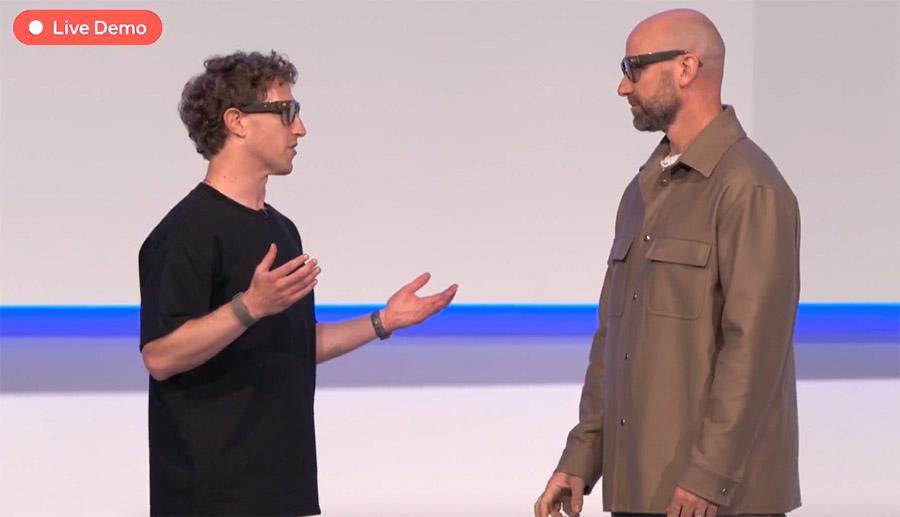 Mark Zuckerberg and Andrew Bosworth course correct after a live demo misfires. [Image: Meta]
 Bosworth would later that day take to Instagram to field questions about the event and these tech demo failures. On the sauce recipe error, Bosworth explained, “When the chef said, ‘Hey, Meta, start Live AI,’ it started every single Ray-Ban Meta’s Live AI in the building, and there were a lot of people in that building.” Calling it an unintentional self-inflicted DDoS attack, Bosworth said Meta’s development server was not set up to handle that amount of traffic.
The WhatsApp call that went unanswered was due to a different issue, a new bug that has now been fixed. Zuckerberg’s Ray-Ban Meta Display glasses had entered a sleep state at the exact moment Bosworth made the call. When the glasses woke up, there was no notification of the incoming call.
Bosworth, however, remains confident in the tech, saying of the onstage glitches “I know the product works. I know it has the goods. So it really was just a demo fail and not, like, a product failure.”
Tech demos not going according to plan is hardly the epic fail many Meta nay-sayers on social media like to paint it as. Other demonstrations of these new technologies and their successful use by consumers should belay any strong criticism. What is abundantly clear is that AI-assisted smart glasses are rapidly becoming the major hardware focus of Meta and its competitors.