Consumer and developer expectations are running high as Valve prepares to enter the standalone headset arena. After the success of the Valve Index and Steam Deck, the company's rumored "Deckard" headset could shake up a market currently dominated by Meta and Apple.
Rumored to be priced at $1,200, Deckard is poised to occupy a space between Meta Quest 3 ($499) and Apple Vision Pro ($3,499), suggesting that Valve is more focused on VR enthusiasts and dedicated PC gamers rather than first-time VR users. Can Deckard deliver a premium VR experience under $1,500, or will it fall short of this admittedly lofty challenge? Rumors and leaks have suggested that Valve will sell the headset at a loss, prioritizing user experience over profit margins as it does with Steam Deck, its handheld gaming computer.
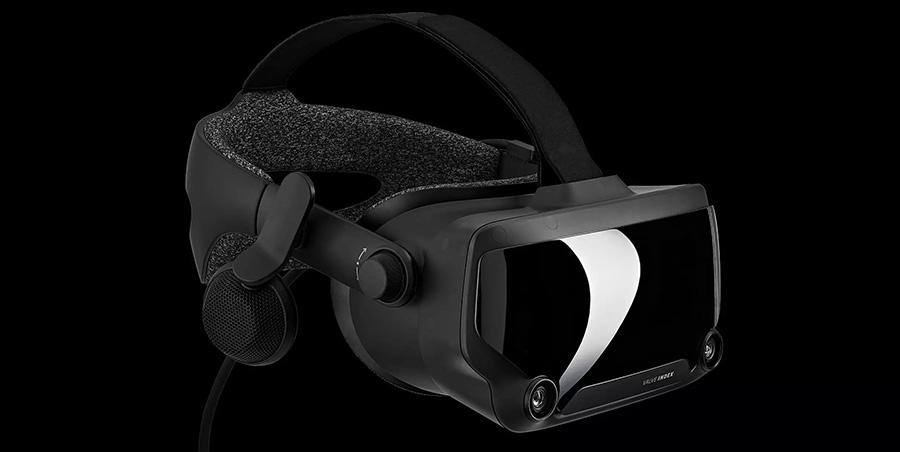 The success of Valve Index tells us that Valve knows how to design, manufacture, and market a powerful piece of VR equipment. That trend is expected to continue with Deckard. [Image: Valve]
Under the Hood
Deckard is rumored to boast a 1440p per-eye resolution at a refresh rate of 120Hz. Quest 3 offers dual 2064 x 2208 pixel LCD displays at 120Hz, while Vision Pro dominates with dual 4K micro-OLED displays totaling 23 million pixels.
Whether Deckard will include Micro-OLED or LCD displays remains, like all tech specs, unconfirmed. The former would push Deckard’s graphic capability close to that of Vision Pro while the latter would align more with Quest 3’s quality.
Chipset details are similarly unconfirmed, with rumors of Snapdragon 8 Gen 3 and Snapdragon XR2 Gen 2 flying about in almost equal measure.
Comfort and Control
The Quest 3 weighs 515g, while the Vision Pro is noticeably heavier at 600-650g, and Vision Pro users have reported that the extra weight becomes uncomfortable after approximately 20 minutes. While Deckard's weight remains unknown, it may prove to be crucial to its success. As a standalone device needing a processor and battery, as well as other integrated features, weight management will be critical. Optimistically, Valve Index has been routinely praised for its weight distribution and comfortable design.
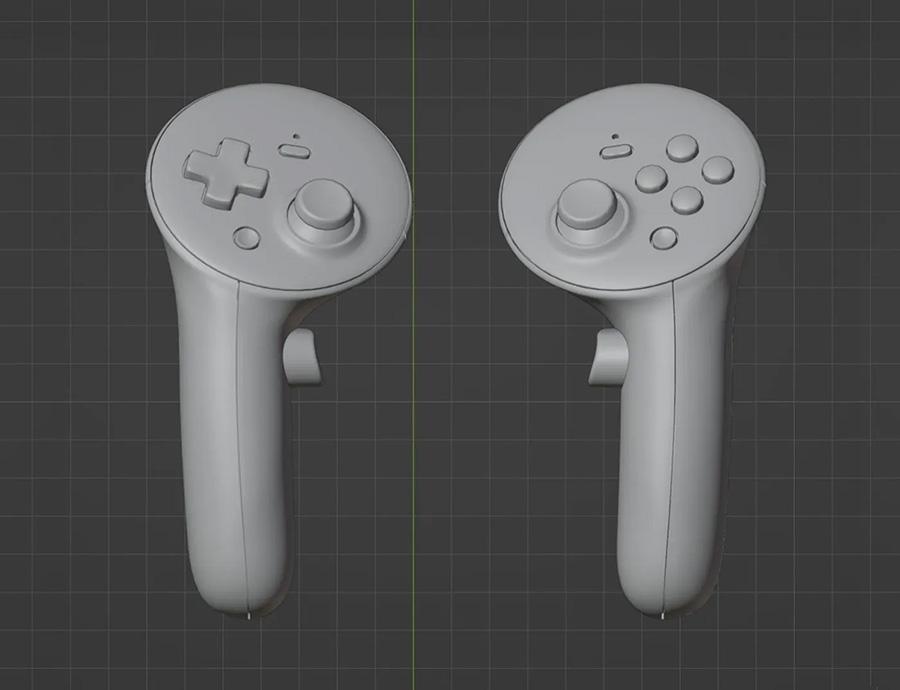 Leaked renders of controllers codenamed Roy appeared in SteamVR drivers and may show Deckard’s eventual controller design. [Image: SteamVR]
Deckard will reportedly ship with dedicated controllers currently codenamed “Roy,” which feature a gamepad-style layout that should easily surpass Vision Pro’s hand and eye tracking when it comes to gaming.
Gaming or GTFO
As a standalone headset, Deckard faces a tough battle squaring performance expectations, comfort, and price. The library of available games will also be a crucial factor in its success.
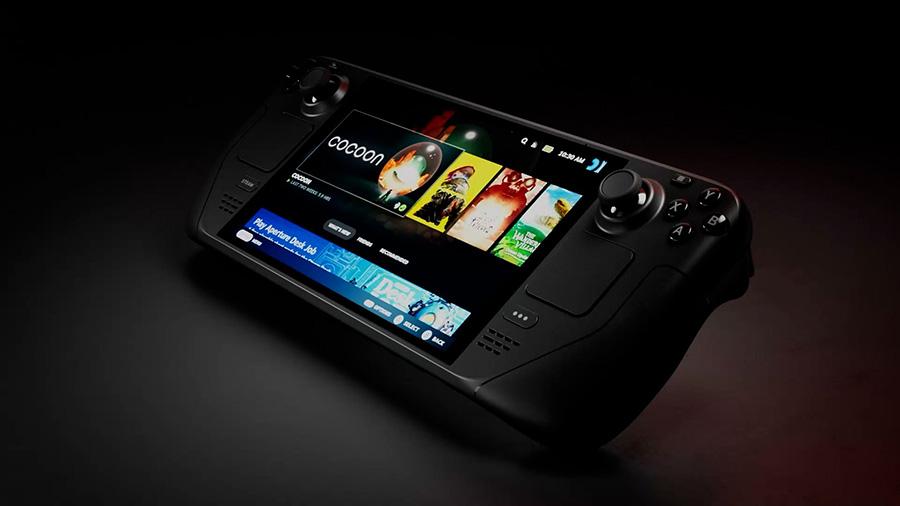 Valve’s Steam Deck perfected the handheld gaming experience. Deckard may do the same for VR gaming. [Image: Valve]
Deckard's potential edge lies in Steam integration. Running modified SteamOS, it should offer native access to Steam's VR library. Additionally, Deckard will reportedly play regular flat-screen Steam Deck games in VR on a virtual big screen, without requiring a PC connection. Imagine your entire Steam library of thousands of games on a giant virtual theater screen, anywhere.
High Hopes and Hybrid Functionality
One compelling rumored feature is the Deckard's hybrid design. Like the Quest 3, it works both standalone and as a PC VR headset. Standalone mode runs VR experiences independently, while PC connection (wired or wireless) enables maximum graphic fidelity. Rumors suggest a dedicated USB dongle for wireless PC streaming that doesn't require a router.
Valve Deckard isn't competing on price with Quest or display tech with Vision Pro. Instead, it's carving out a niche: premium VR gaming for PC enthusiasts. At $1,200, it asks buyers to invest significantly more than Quest 3, but offers deeper Steam integration, flat-screen game support in VR, and quality PC VR connectivity. For gamers with substantial Steam libraries, the value proposition is compelling.
 Valve Deckard users can expect an excellent adult VR gaming experience. [Image: Villain Simulator]
For devoted VR porn fans, Deckard has ample appeal, especially for those who enjoy adult VR gaming. But will there be enough hardcore VR enthusiasts willing to spend $1,200? The original Index launched at $999 in 2019 and found its audience among porn fans, gamers, and casual VR users alike. Adjusted for inflation, Deckard's pricing is roughly equivalent.
If leaks and rumors prove accurate and Valve delivers seamless Steam integration, comfortable design, and solid specs, Deckard - or “Steam Frame” as the latest leaks suggest it could eventually be called - could become the go-to headset for serious VR gamers and VR porn fans alike. The VR market has room for all three approaches: Meta's mainstream dominance, Apple's premium productivity niche, and Valve potentially capturing hardcore gamers' hearts and wallets.
As Deckard has reportedly entered mass production, we may find out much more about this hotly anticipated device when it lands, as expected, before the end of 2025.